Index Of Being
Introduction
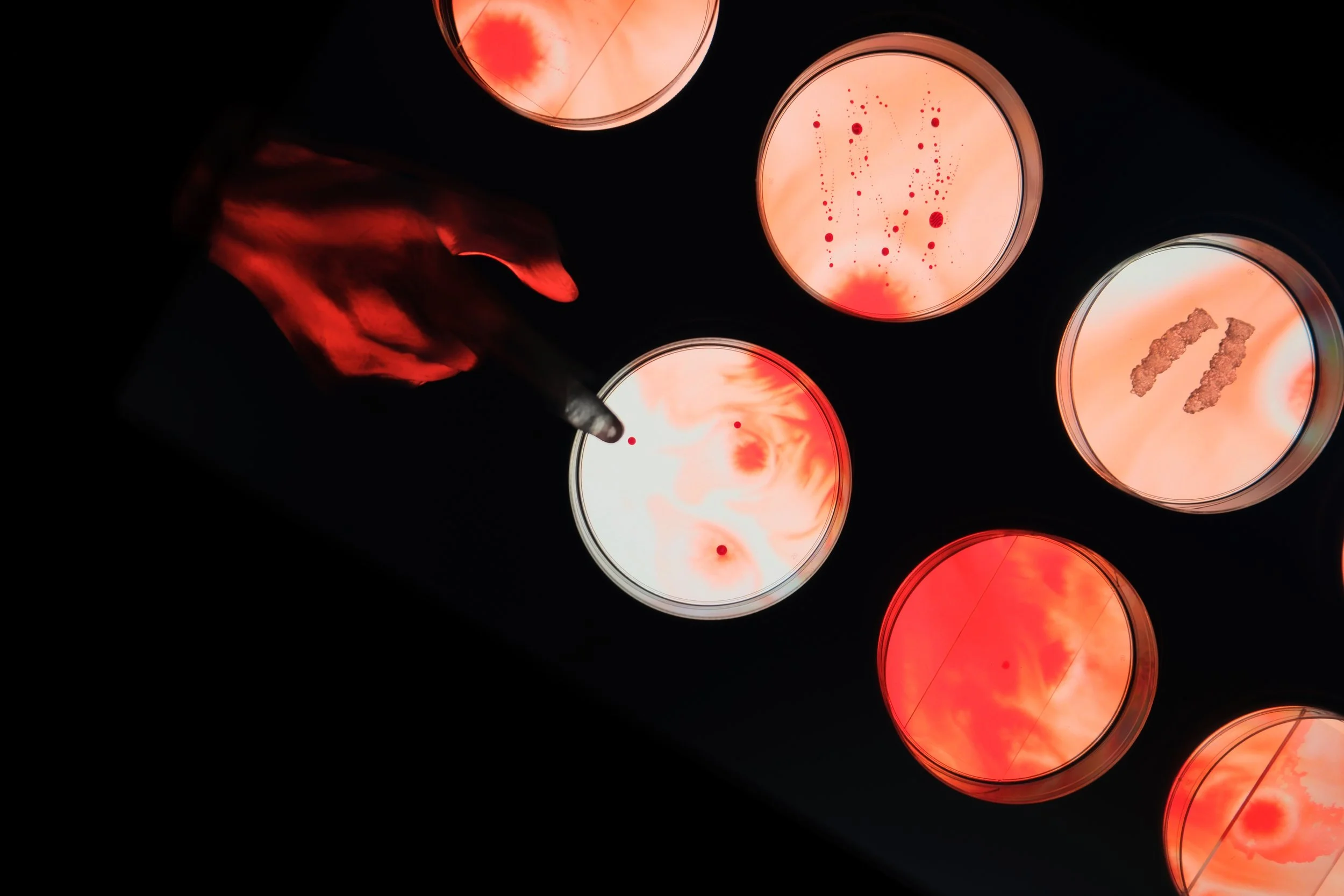
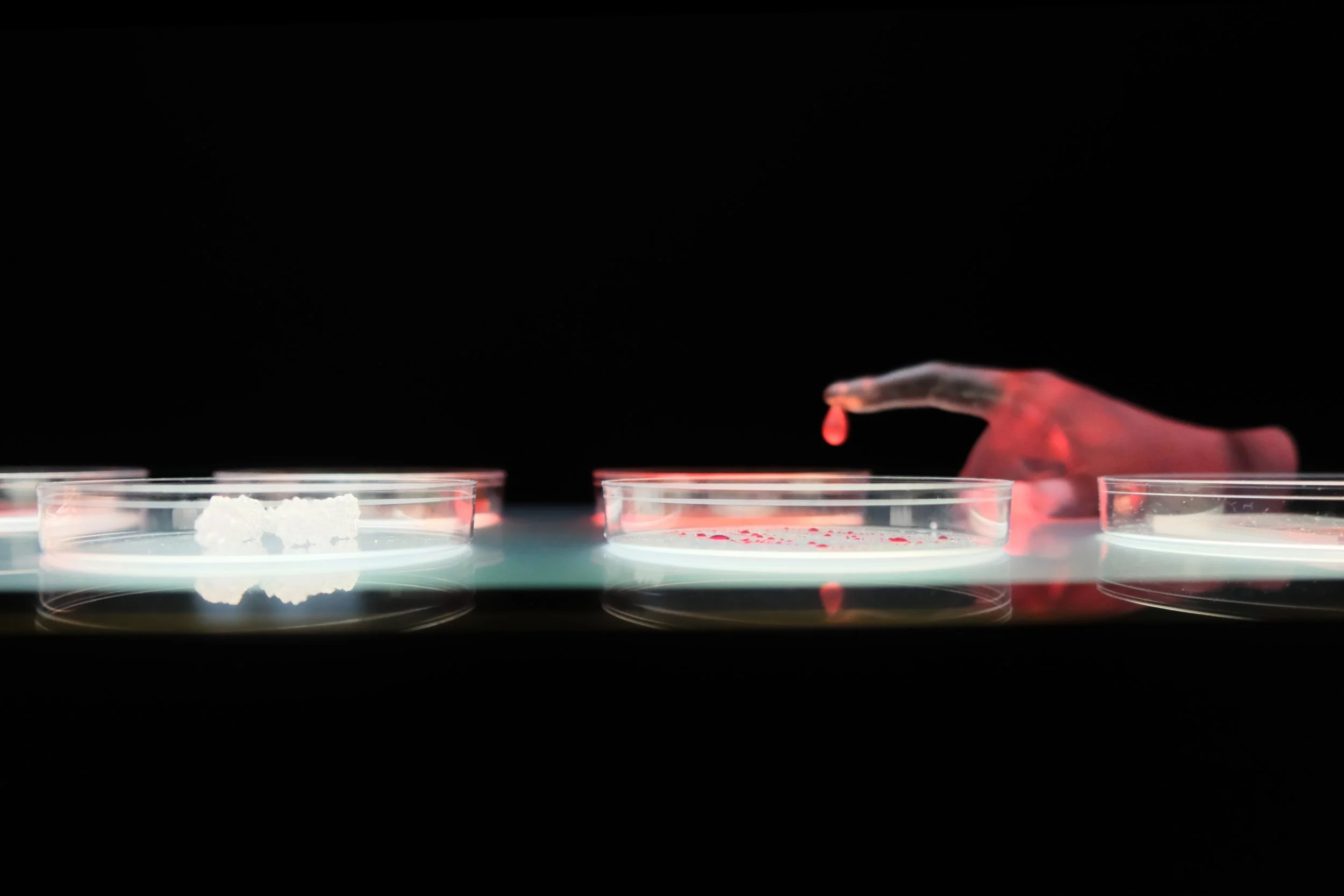
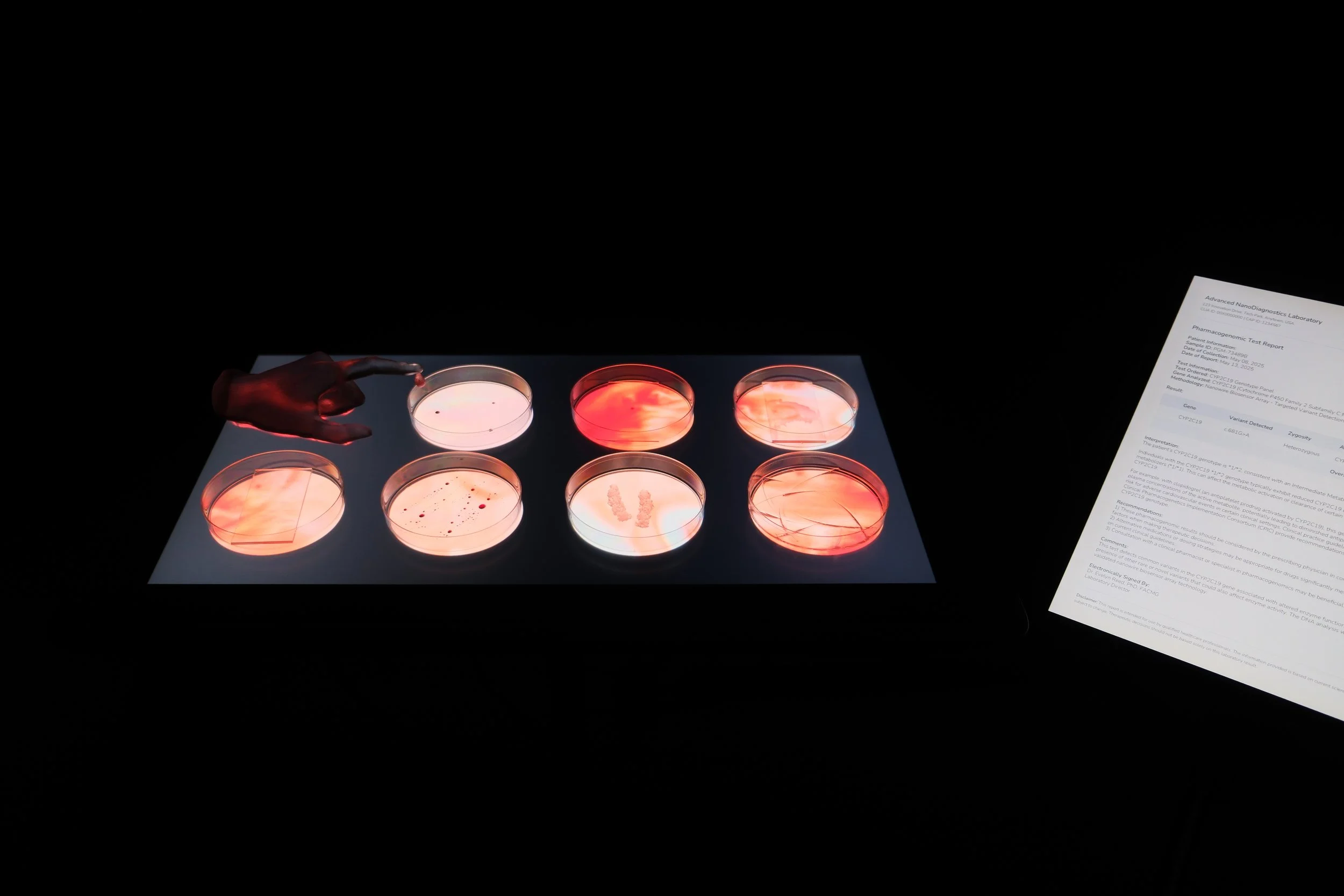
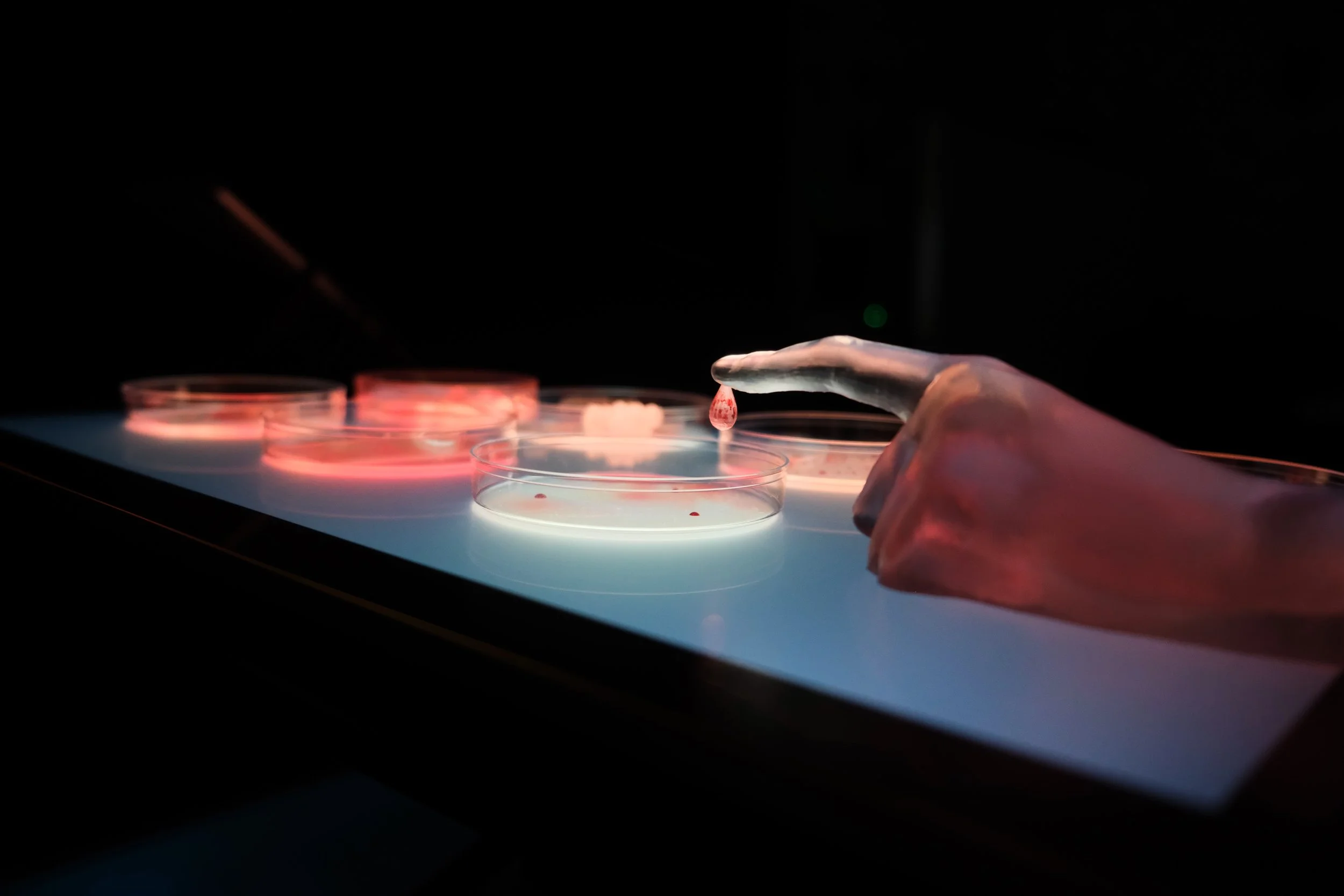
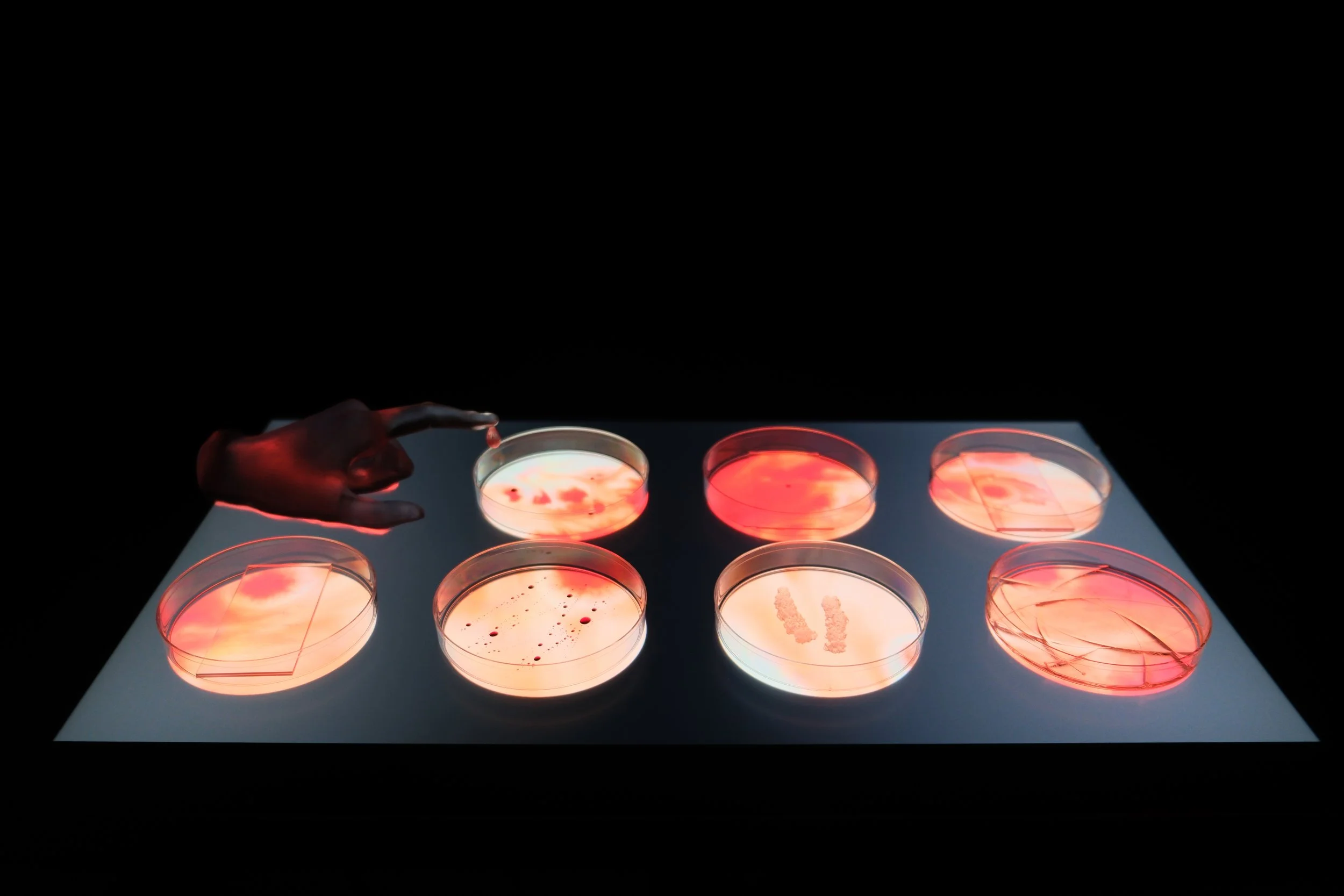
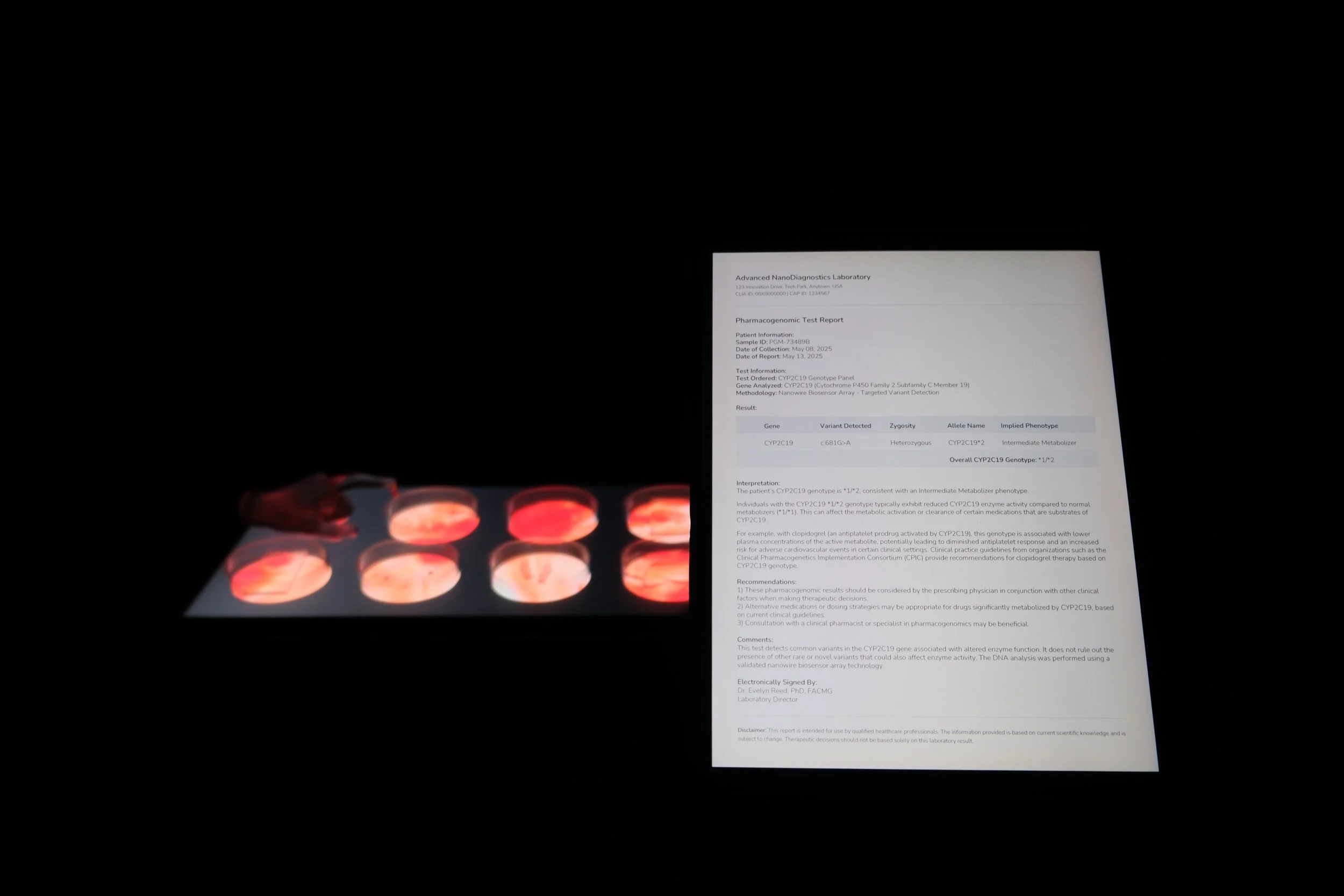
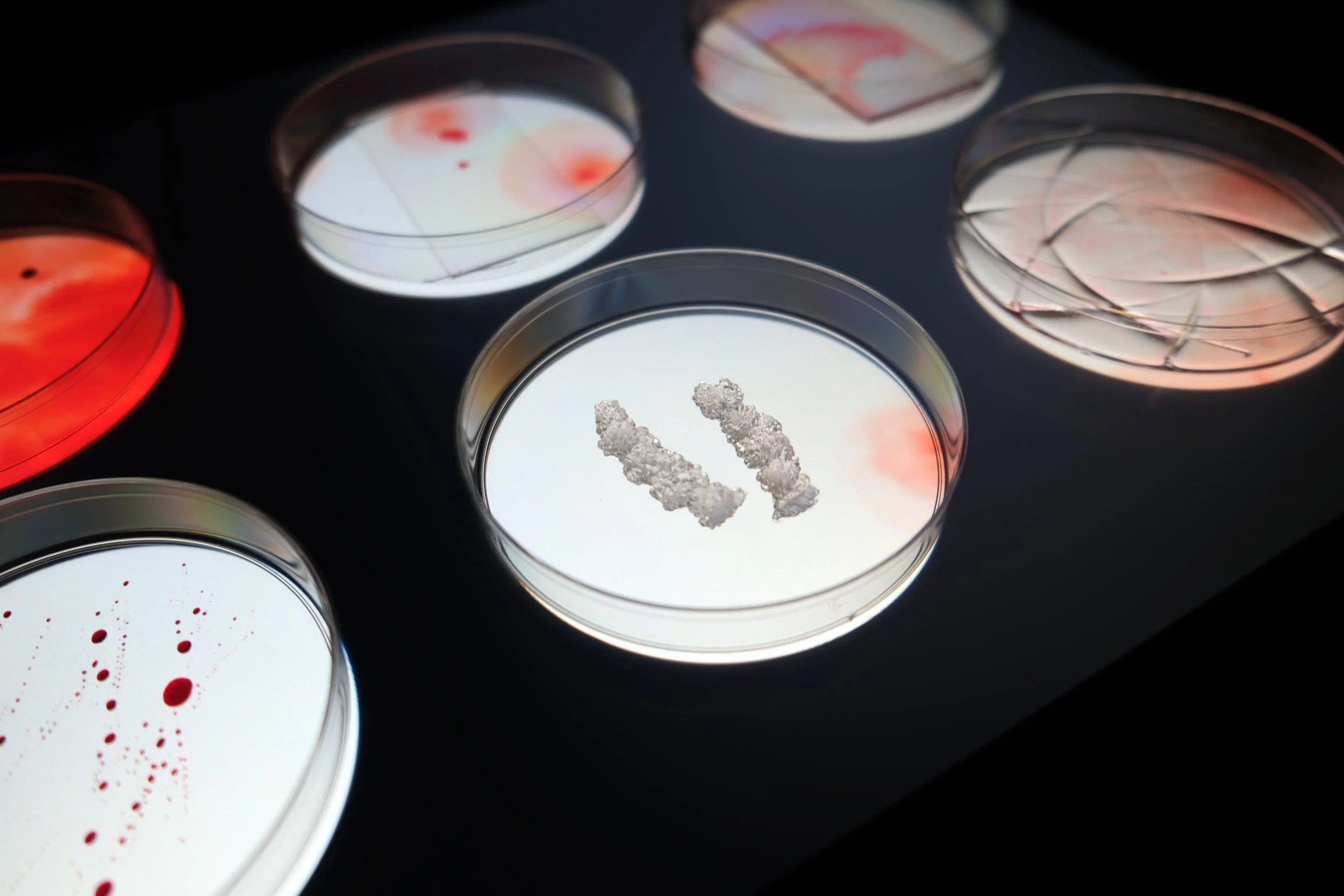
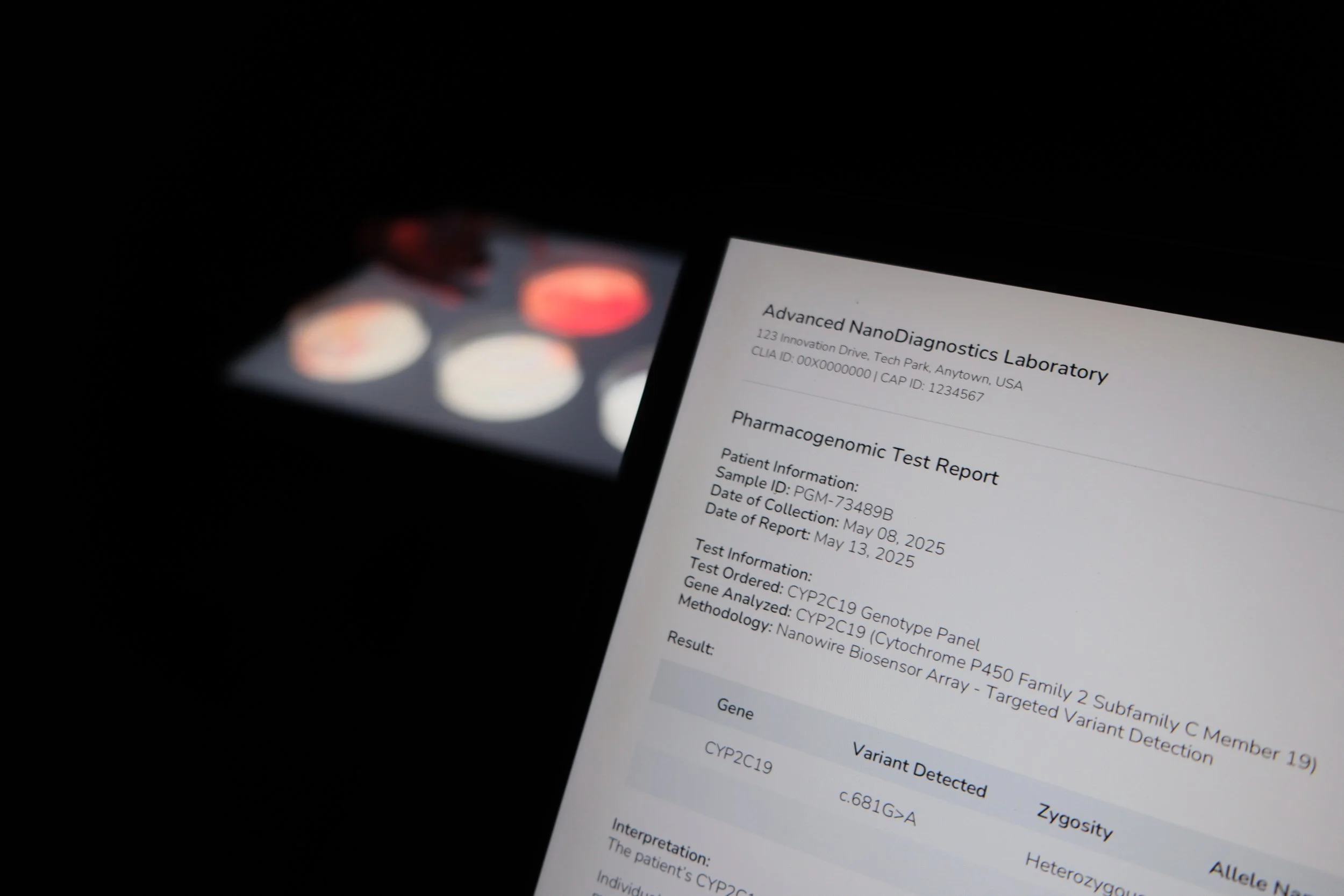
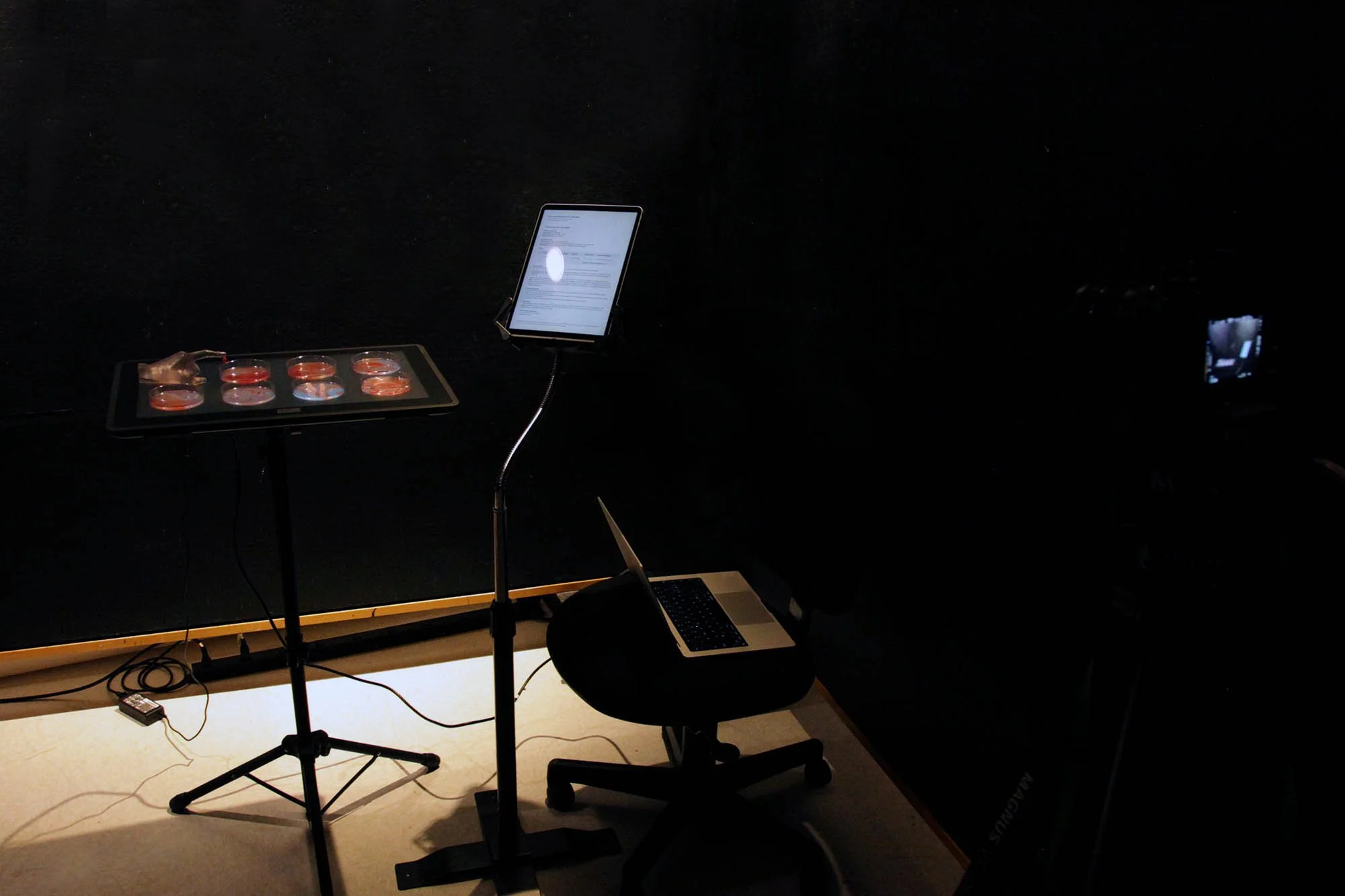
Index of Being is a dynamic art installation and sculpture that explores the intersection of human identity, biology, and cutting-edge diagnostic technology. The work simulates the scientific process of nanowire biosensor development for DNA detection, originating from a drop of blood sampled from a fingertip. Central to the installation is a 3D-scanned and printed hand of the creator, representing the human element and the point of sample origin. This is juxtaposed with a series of petri dishes, containing abstracted, tangible nanowire structures. The integrated screen at the base of these petri dishes displays a visualization of fluid, blood-like movements flowing through a sequence of petri dishes, alluding to the multi-stage scientific methodology. A simulated DNA report presents a synthesized narrative from this fictional analysis. Through these assembled components, Index of Being aims to evoke contemplation on the nature of self as revealed through technological mediation and the aesthetics of otherwise invisible biological and scientific processes.
Origin of the Idea
The conception of Index of Being was sparked by a confluence of learning about the real science behind emerging nanotechnologies and a compelling discussion within our art class regarding the ethical implications of personal genetic data. DNA testing using nanowire biosensors is an area of research based on established scientific principles and currently vibrant with development aimed at creating faster, more sensitive, and portable diagnostic tools.[1] The realization that such advanced nanotechnology could extract complex personal information from a minute biological sample was profound. This, coupled with the exploration of genetic data ethics, led me to question how art could interpret and communicate these powerful scientific advancements and their societal impact. The project thus grew from a desire to translate these intricate and often invisible concepts into a tangible, sensory experience, prompting viewers to consider both the aesthetics of scientific discovery and its influence on our perception of human identity.
[1] Tran, V. A.; Vo, G. N. L.; Vo, T.-T. T.; Doan, V. D.; Vo, V.; Le, V. T. Recent Applications and Prospects of Nanowire-Based Biosensors. Processes 2023, 11(6), 1739. https://doi.org/10.3390/pr11061739
Artistic Vision and Execution
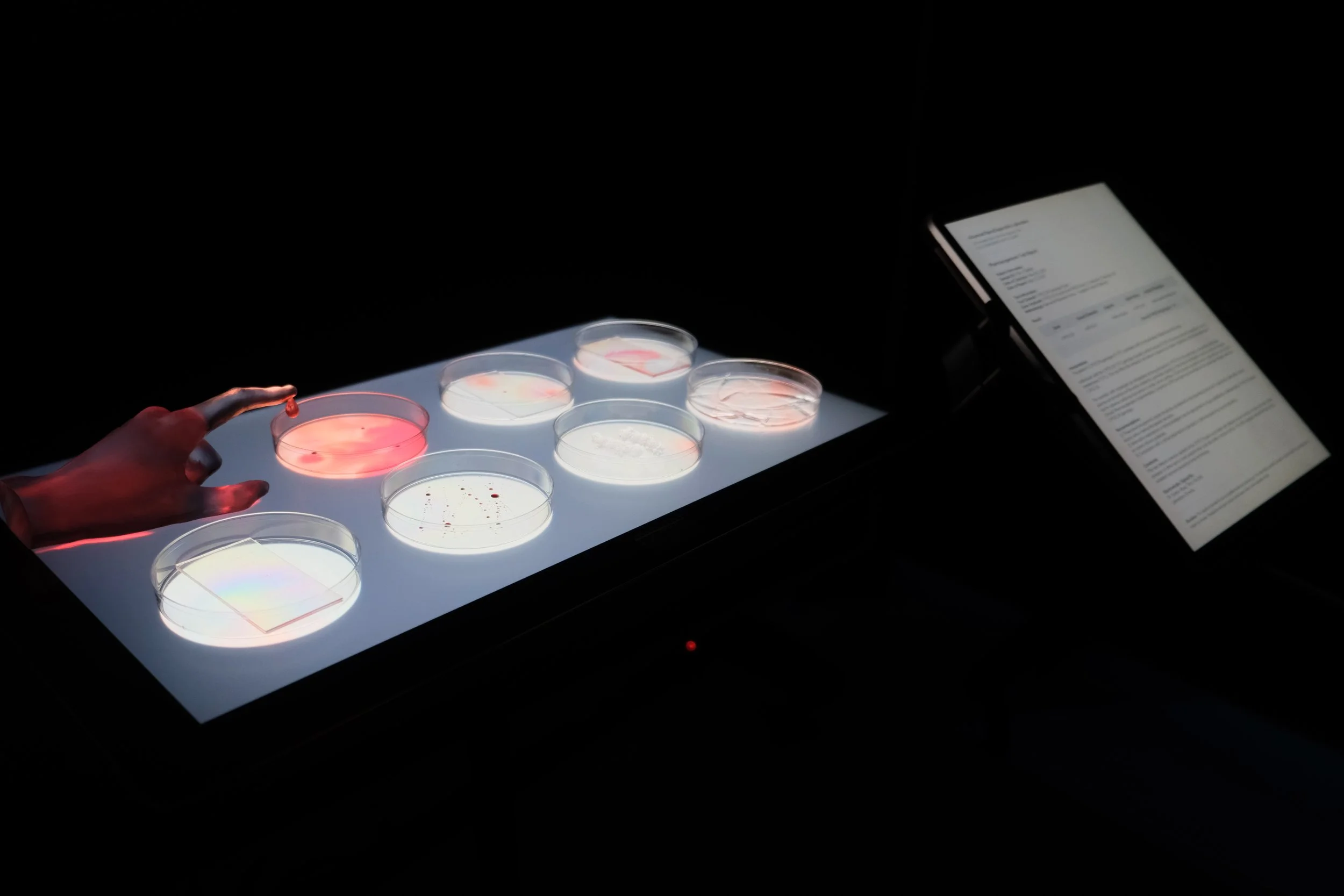
My artistic vision for Index of Being was to create an environment that felt simultaneously clinical and intimate, inviting both analytical observation and personal reflection. The 3D scanned hand acts as a direct human signifier, grounding the technological aspects in the personal and corporeal. The petri dishes, traditional symbols of scientific cultivation, are re-imagined here as miniature stages or 'portals' into the nanoscale. The nanowire forms serve as sculptural, abstracted representations of the sensing technology. Crucially, the dynamic screen animates the installation, transforming static objects into a narrative of process and discovery through its abstract visualization of blood-like flows moving through seven symbolic stages. This visual loop, suggestive of biological movement and procedural progression, underscores the active, ongoing nature of scientific inquiry and the unfolding of information that the artwork simulates, making the procedure itself an aesthetic element.
Technical Development
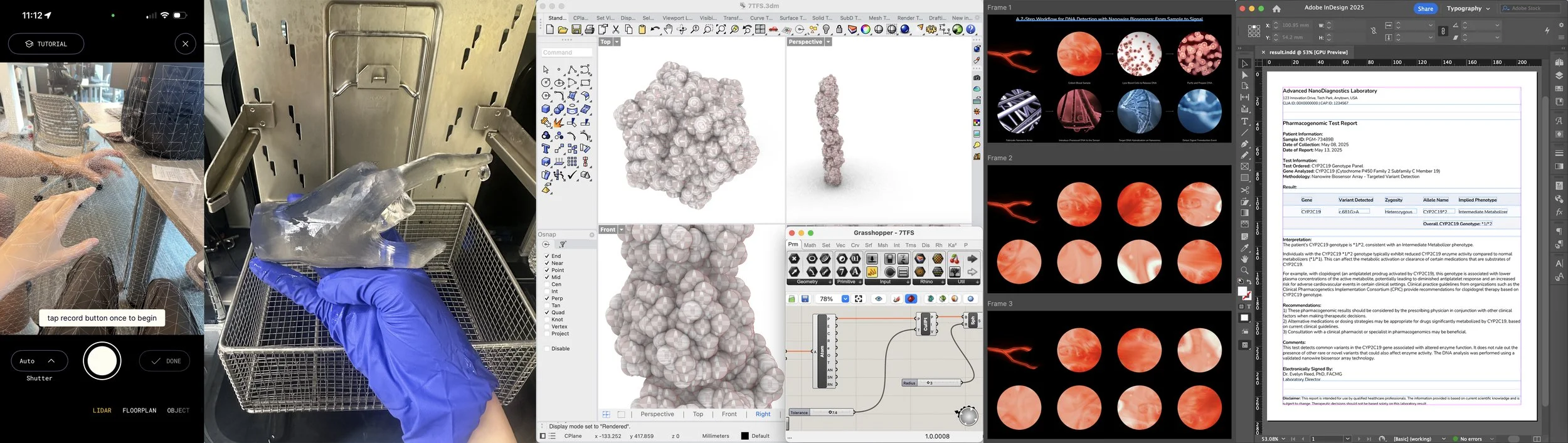
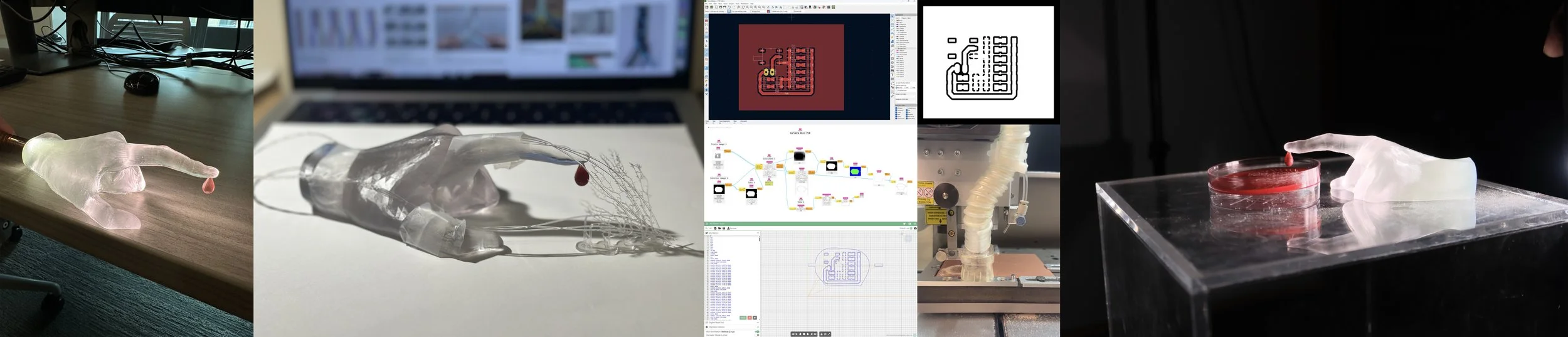
The realization of Index of Being involved a multi-stage technical process. The hand element was created by 3D scanning my hand using PolyCam and subsequently 3D printed to achieve a tangible human presence. The abstract nanowire structures within the petri dishes were designed in Rhino, processed using Grasshopper, and then 3D printed, focusing on forms that suggested both organic growth and technological precision. The dynamic display utilizes a digital tablet connected to a laptop, with animations designed in Figma to present an abstract visual narrative of fluid movement across seven conceptual stages, symbolizing the underlying workflow. The simulated DNA report was designed in Adobe InDesign and displayed with an iPad, with careful attention to typography and layout to evoke a sense of authenticity.
Evolution and Challenges
The project largely followed the initial proposal, with refinements focused on material choices and enhancing the dynamic display elements for narrative clarity. A significant challenge was effectively visualizing the data transfer and DNA processing workflow as a dynamic element. My initial explorations with LEDs, fiber optics, and custom PCBs aimed to convey data movement, but these proved difficult to refine for the clarity I sought. An interim idea of using a general light box for overall illumination also fell short of representing the dynamic process. This led to a pivotal shift: integrating a display tablet under the petri dishes. Using animations designed in Figma, this solution enabled a clear and engaging abstract visual elaboration of the process, conceptualized as blood flowing through seven distinct stages from sample to signal. This vividly illustrated the simulated data transfer and DNA processing in a more metaphorical and evocative way, becoming a core component of the installation's narrative.
Conclusion and Reflection
Index of Being ultimately endeavors to provide a contemplative space where art, science, and technology converge. By translating the complex and often invisible process of DNA detection via nanowire biosensors into a multi-sensory installation, the work invites viewers to reflect on how such technologies shape our understanding of life, identity, and the narratives we construct from biological data. Creating this piece has been an exploration into visualizing the unseen, materializing abstract scientific concepts, and questioning the ways in which we interface with the ever-evolving landscape of personal information. The iterative problem-solving involved in realizing the dynamic display particularly underscored the journey of adapting artistic vision to technical possibilities, ultimately leading to a more effective and abstract mode of communication. This project reaffirms my belief in art's capacity to mediate complex ideas and foster a deeper public engagement with scientific advancement.
Exhibition
🙌 Exhibited at MIT ACT Digital Art from Nanoscale to Human Scale, 2025